G-STAR 2026's main sponsor is Crack, and no agency has ruled on whether it counts as a game
Wrtn's AI character chat app Crack is the main sponsor of G-STAR 2026, the first company from outside the games industry to take the role. 47.8% of Crack's users are teenagers or younger, yet it is still unsettled whether Korea's game law treats chat apps like it as games.
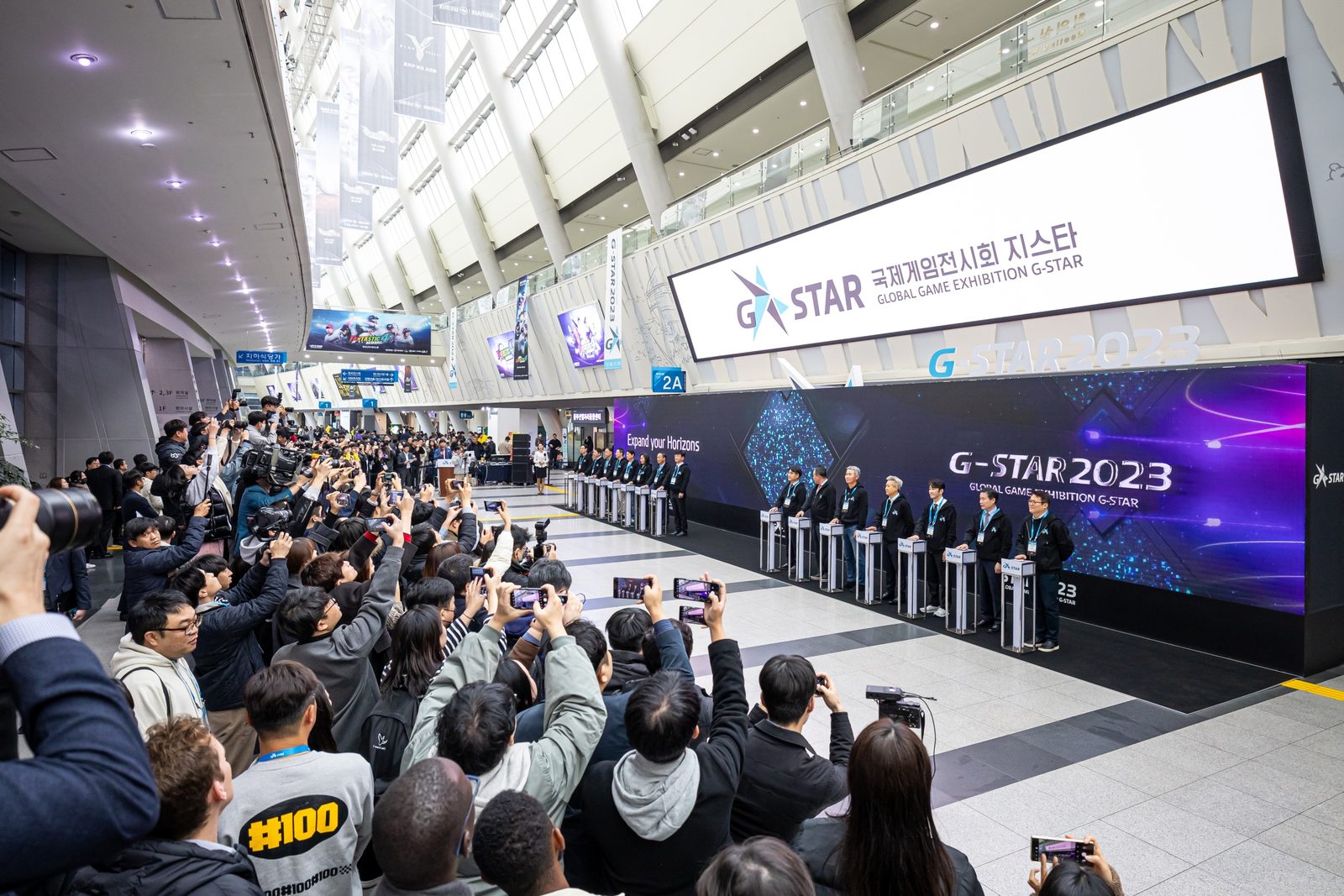
G-STAR's organizing committee announced on August 13, 2026, that this year's main sponsor would be Crack, Wrtn's AI character chat app. Jung Seung-woo, director of the organizing committee's office, said this was the first time a company outside the games industry had become the main sponsor[1]. An app that is not a game has become the face of South Korea's largest game show. Nearly half of Crack's users are teenagers or younger. Yet no agency has determined whether the app qualifies as a game[2][3]. This account draws on news reports and official materials reviewed as of September 29, 2026.
An app where half the users are teenagers
According to Mobile Index, Zeta had 1,586,178 monthly active users in August 2026. That was just over 27 times the 58,069 recorded in April 2024. Crack had 538,841 monthly active users that same August[2].
The age breakdown shows who uses these apps most. Teenagers and younger users account for 58.3% of Zeta's users and 47.8% of Crack's[3]. Including users in their twenties brings those shares to 82% for Zeta and about 90% for Crack[4]. Users also spend considerable time on the apps. Citing Mobile Index data, Seoul Economic Daily reported average monthly usage of 40 hours for Zeta and 26 hours for Crack[5].
What the law defines as a game
The Game Industry Promotion Act defines a game as "a video product made to enable entertainment using information processing technology such as computer programs or mechanical devices, or to additionally enhance the benefits of leisure activities, learning and exercise" (unofficial translation of the Korean statute)[6]. No determination has yet been made on whether open-ended conversations with characters fall within this definition. As the reporting noted, both apps have been distributed as entertainment apps, and no agency has assessed whether they qualify as games. Google and Apple assigned their age ratings, and compliance with government guidelines has never been investigated[6].
A bill to comprehensively revise the Game Industry Promotion Act has remained stalled for a long time since its introduction in the National Assembly[6]. Redefining what constitutes a game is considered one of the issues at stake in the bill[1].
Action begins outside game law
While these apps have remained beyond the reach of game regulations because they are not classified as games, action has begun elsewhere.
In July 2026, the National Assembly Research Service (Korea) published a report on children and adolescents exposed to the risks of AI chatbots. Kim Na-jeong, an assistant legislative researcher, assessed that endless conversations and access at any time could increase emotional dependence or excessive engagement among children and adolescents. The report proposed a system of safeguards to prevent problems before they arise through safer service design and stronger responsibilities for providers[3].
Cho In-cheol, a Democratic Party of Korea lawmaker, introduced a bill that would, at a guardian's request, restrict how and for how long children and adolescents can use these services and allow guardians to receive the contents of their conversations with characters[5]. California in the United States has put into effect a law regulating AI companion chatbots (SB 243)[2]. Aju Business Daily predicted that the issue would also be a major focus of October's parliamentary audit of government agencies[2].
The companies say they already filter out violent or hateful content. They are calling for a balance between user protection and industry innovation rather than blanket restrictions[5].
Sources
[1] JKN. 2026 지스타, 비게임 '크랙' 메인 스폰서… AI, '게임 정의' 전복시켰다 (G-STAR 2026 names non-game app Crack as main sponsor; AI upends the definition of a game). JKN, August 22, 2026.
[2] Baek Seo-hyun. [청소년 AI 챗봇 과몰입] AI 챗봇 중독…해외는 규제, 한국은 사각지대 (Teen AI chatbot addiction: Regulation abroad, a blind spot in Korea). Aju Business Daily, September 8, 2026.
[3] Digital Today. AI 캐릭터챗 이용자 미성년자 비중 커...보호장치 과제로 (Minors make up a large share of AI character chat users; safeguards remain a challenge). Digital Today, September 8, 2026.
[4] The Financial News. '최애' 캐릭터와 수다 떨다 시간 훌쩍…'관계형 AI'에 빠진 1020 (Teens and twentysomethings lose track of time chatting with favorite characters on "relational AI" apps). The Financial News, September 7, 2026.
[5] Seoul Economic Daily. 캐릭터와 한달 40시간 대화…AI 채팅 과몰입 규제 움직임 (40 hours a month chatting with characters; moves to regulate excessive AI chat use). Seoul Economic Daily, August 2, 2026.
[6] Yonhap News. 게임위드인 연재, AI가 흔드는 '게임의 정의' (Inside Games series: AI challenges the definition of a game). Published in The Financial News, August 22, 2026.
Screenshots
Images: official G-STAR assets
Source: Yonhap News ↗