A peak of 833,921 players, and bosses that won't go down in Phantom Blade Zero
A framed swordsman has 66 days left in this martial arts action RPG, which peaked at 833,921 concurrent Steam players. Blocking and weapon swaps ease the pressure, but reviews flag drawn-out bosses and late-game frame drops.
Before you pick
- Bottom line
- Combat built around blocking and weapon swaps is reason enough to buy, but the story is fragmented and late-game performance needs checking after patches.
- Know before you start
- Some reviewers find boss health excessive, while healing options remain limited until midway through the game
- Why now
- Phantom Blade Zero tops 4 million sales in 72 hours, and Steam preorder refunds count from launch day 2026-11-03
- How it plays
- Single-player
- Story-driven
- Compare with
- LighterCONTROL ResonantStory-driven
- With friendsElden RingOnline co-op
Valve's Steam most-played chart dated November 1 had a new entry at number 5. Phantom Blade Zero recorded a peak of 833,921 concurrent players in that chart, and ranked number 3 on Steam's Korean top-sellers list on November 2[2]. It is the debut game from studio S-GAME[7]. Steam and PlayStation's support page list an October 28 release, while the official website gives October 29[1][4][5]. The supported platforms are PC and PS5. This article reflects information as of November 2, 2026.
An assassin on the run, with 66 days left
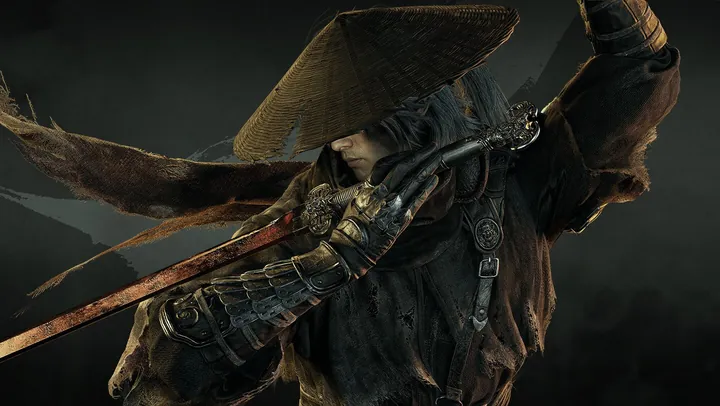
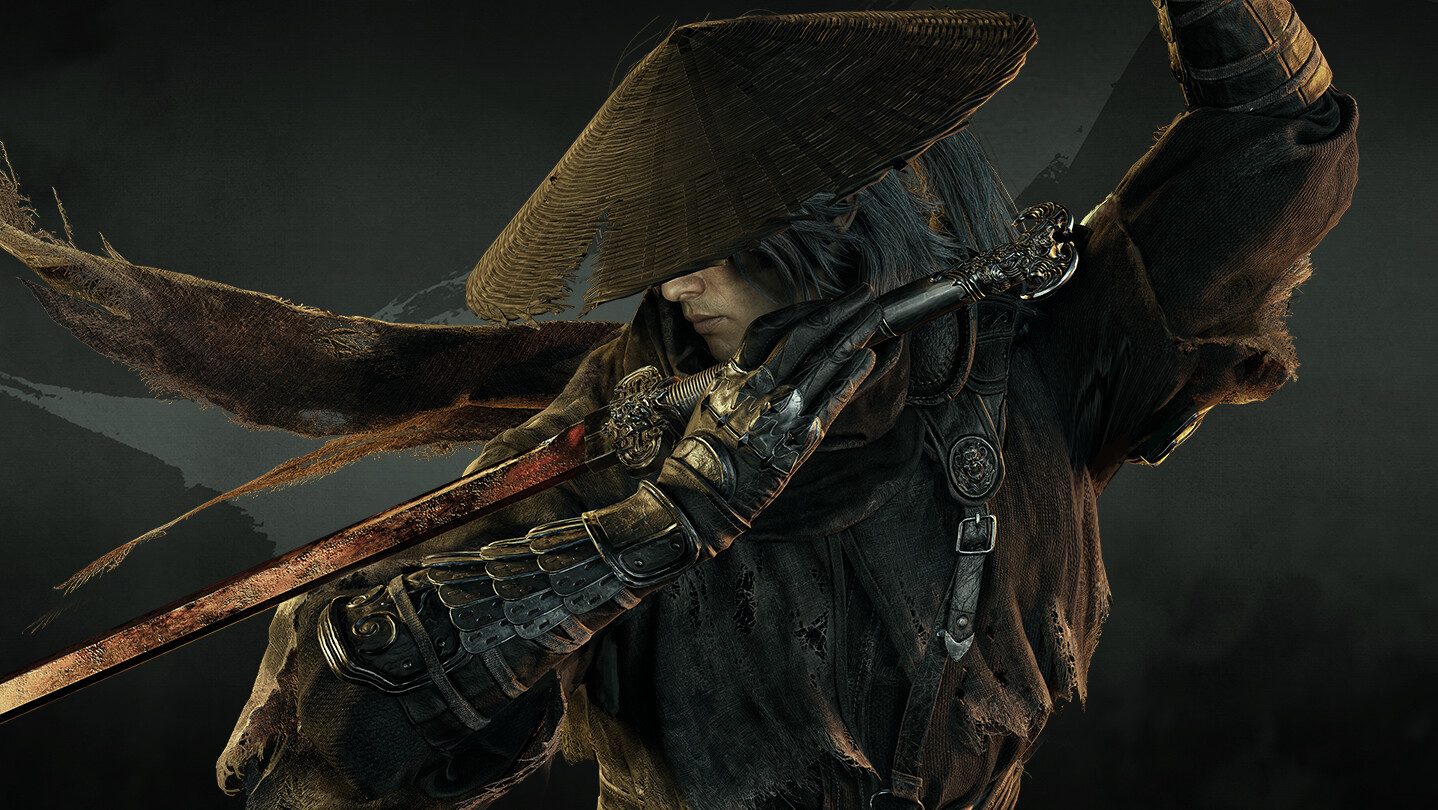
The protagonist, Soul, is an assassin belonging to an organization called the Order[7]. According to the official description, he has been framed for murder and suffered a fatal injury to his heart, leaving him 66 days to flee his pursuers and uncover a conspiracy in the martial arts world[1]. S-GAME calls its setting 'kungfupunk': a blend of classic martial arts cinema, mechanical prosthetic arms and remnants of the industrial age, where the sound of a pipa can give way to an electric guitar[1][7].
Its origins go back considerably further than this launch. Director Soulframe Liang laid the groundwork more than 15 years ago with the indie RPG Rainblood: Town of Death. Hong Kong martial arts actor Donnie Yen and his stunt team contributed to the combat movements, and Yen also appears as a character[7]. S-GAME develops and publishes the game, which uses Unreal Engine 5; the studio's official description also credits martial arts film action directors with shaping movements captured for the game[1].
You can survive without a perfect parry
The action may look demanding, but TechRadar's reviewer found the combat forgiving. Holding block deflects most incoming attacks; it drains the stamina-like resource sha-chi, but switching weapons refills it[6]. Creative Bloq's reviewer likewise described regularly emptying the gauge, swapping weapons and continuing the assault, though a cooldown prevents that sequence from being repeated indefinitely[7].
That makes weapon switching part of the rhythm of a fight, rather than simply a way to try a different attack. The reviewers' accounts describe a system that gives players room to maintain pressure without asking for perfectly timed responses to every ordinary blow. The exceptions have clear color cues: attacks marked by a blue flash need to be parried, while those marked by a red flash must be dodged[6].
Defeat also carries fewer lingering costs than the game's appearance might suggest. There is no need to return to the place where you died to retrieve lost resources, and resting at a checkpoint does not bring defeated enemies back to life[6][7]. Those differences help explain why both reviewers were reluctant to call it a Soulslike. The demanding encounters remain, but the familiar run back to recover what you dropped does not.
Controls have a limitation worth checking before committing: there are three controller presets, but no individual button remapping[6]. Steam lists full controller support, recommends a gamepad and includes adjustable difficulty among the available features[1].
Bosses hand out weapons, but take their time going down
The official description lists around 30 primary weapons and around 20 phantom weapons[1]. Creative Bloq puts the total above 50 and says most bosses award a new weapon[7]. The variety extends to how they work, with examples including a blade that grows stronger as its wielder gets drunk and an enormous tower shield capable of sending enemies flying[6].
Much of the difficulty is concentrated in the bosses. TechRadar's reviewer found ordinary enemies relatively easy to cut through, but was defeated repeatedly by some of the larger encounters[6]. Creative Bloq's criticism was more specific: even after staggering an enemy and landing the heaviest attacks, the reviewer felt that the health bar barely moved, while healing options were scarce and did not receive substantial upgrades until the middle of the game[7].
That distinction matters when weighing the otherwise forgiving defensive systems. Being able to block comfortably does not necessarily make a boss quick to beat. For Creative Bloq's reviewer, the issue was how long those battles lasted with the tools available. Bosses with a second phase do at least have a checkpoint, so defeat there does not mean repeating the first phase[7].
Keeping track of the story starts with the names
The narrative is spread across flashbacks, Soul's memories and memory flowers scattered through the world. TechRadar's reviewer struggled with the volume of proper nouns and with keeping track of who had done what and when; listening to several memory flowers in succession could also interrupt the pace[6]. In Notebookcheck's roundup, Push Square criticized the storytelling, while VGC took issue with the characters and linear level design[8].
Exploration has its own boundaries. Creative Bloq reported numerous invisible walls, with wall-running and grappling restricted to designated points[7]. Those limits are worth bearing in mind alongside the fragmented storytelling: the world may contain scattered pieces of history, but its traversal tools do not offer unrestricted movement.
Korean subtitles are supported, with voice acting available in English and Chinese[1]. TechRadar's reviewer spent around 20 hours playing, including some side quests, without finishing the main story[6]. That is a useful indication of the commitment involved, though it is not a measured completion time. Players coming primarily for the narrative should expect to spend time assembling its pieces as well as working through the fights.
Check storage and frame rates before spending 69,800 won
The standard edition costs 69,800 won on both Steam and the PlayStation Store, while the Digital Deluxe edition costs 79,800 won[1][3]. The additional 10,000 won buys two cosmetic appearances, a digital art book and a digital soundtrack; owners of the standard edition can also buy the PlayStation Store's 10,000 won upgrade pack[3][4]. Steam lists only that deluxe upgrade as an additional product, and its feature list includes single-player support without multiplayer features[1]. The official website says the preorder accessory and outfit can also be obtained through playing the game[5].
On PC, the requirements call for 145GB of storage and an SSD. The minimum graphics cards are a GTX 1660 6GB or RX 5500 XT 8GB, with 16GB of RAM and a target of 1080p at 30fps with upscaling enabled; the recommended cards are an RTX 3060 Ti 8GB or RX 6700 XT 12GB for 1440p at 60fps, also with upscaling enabled[1]. Both targets therefore need to be read with that upscaling condition attached.
Performance reports differ substantially. TechRadar's reviewer played in PS5 balanced mode at around 40fps and encountered very little stuttering[6]. Creative Bloq's reviewer reported that late-game battles on PS5 Pro sometimes slowed to something resembling a slideshow, and that disabling ray tracing and switching to performance mode did not resolve it[7]. Stuttering and frame-rate drops have also been reported on PC[8]. S-GAME released a patch, but Creative Bloq's reviewer was unable to retest its effect[7].
If experimenting with weapons while taking ten runs at the same boss sounds enjoyable, Phantom Blade Zero offers plenty of opportunity for that. If the story is the main attraction, its density of names may wear you down first. Either way, the practical next step is the same: read S-GAME's patch notes and look for an explicit fix for the late-game combat frame drops before buying.
Sources
[1] Valve. Phantom Blade Zero Steam store page. Official description, release date, Korean pricing, additional products, features, supported languages and PC requirements. Accessed November 2, 2026.
[2] Valve. Steam most-played games chart. November 1 rankings and peak concurrent players, including the Korean top-sellers list for the same day. Accessed November 2, 2026.
[3] Sony Interactive Entertainment. Phantom Blade Zero PlayStation page. Korean pricing and contents of each edition. Accessed November 2, 2026.
[4] PlayStation Support. Phantom Blade Zero support. Release date and edition contents. Accessed November 2, 2026.
[5] S-GAME. Phantom Blade Zero official website. Listed release date. Accessed November 2, 2026.
[6] TechRadar. Phantom Blade Zero review. Assessment of combat, difficulty, story, controls and PS5 performance. Accessed November 2, 2026.
[7] Creative Bloq. Phantom Blade Zero review. Protagonist and production background, weapons, boss battles, exploration, PS5 Pro performance and patches. Accessed November 2, 2026.
[8] Notebookcheck. Phantom Blade Zero emerges as potential Game of the Year contender despite technical shortcomings. Criticism across publications and PC performance reports. Accessed November 2, 2026.
Screenshots
Images: official Steam assets