Six Weeks After 1.0, Palworld Still Holds 187,000 Players
Two and a half years of Early Access ended in July, and the patent claims narrowed to builds no longer distributed. What $29.99 buys, what the first ten hours ask of you, why the recommended spec calls for 32 GB of RAM, and what happens to the frame rate once the base grows.
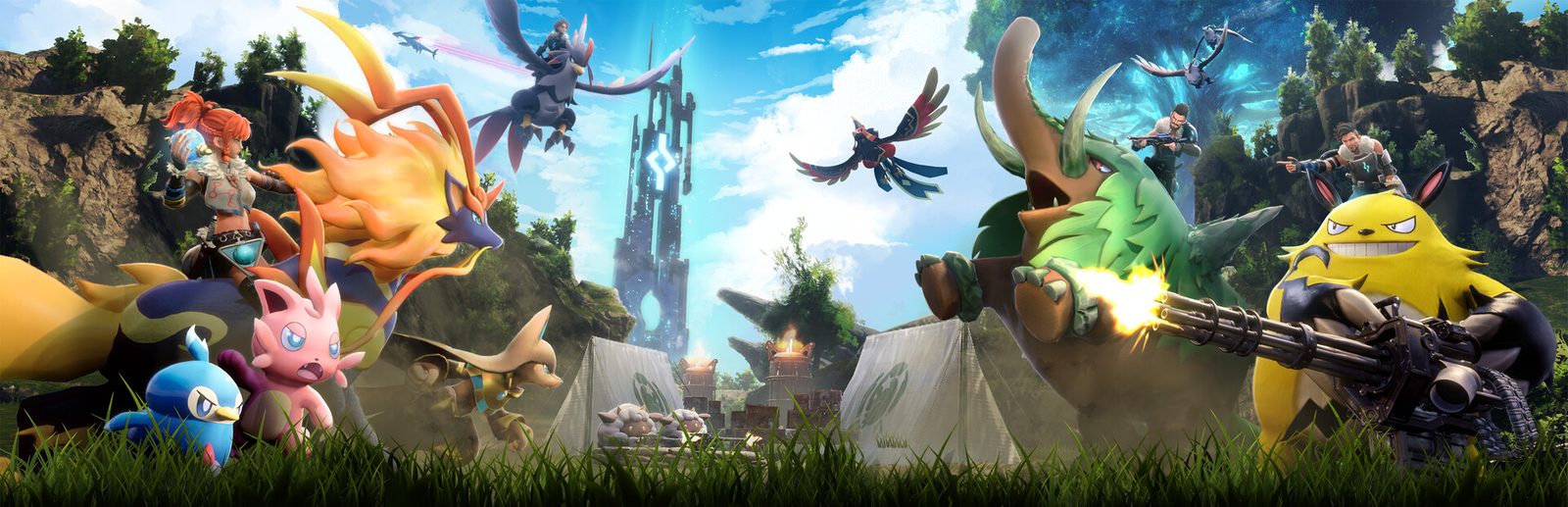
For two and a half years, the story attached to this game was a court case. Nintendo and The Pokémon Company sued Pocketpair for patent infringement, and the conversation around Palworld was mostly about whether the studio would survive it rather than about the game. As of August 23, 2026, that case has become a small thing. In November 2025 the claims were narrowed to builds that are no longer distributed, and the damages sought amount to 10 million yen, roughly $66,000.
The game went the other way over the same stretch. Palworld left Early Access in July, and six weeks later it sits at 187,178 concurrent players on Steam, third on the most-played list. The question worth asking has changed with it. Not whether the game survives, but whether it is any good now that it is finished. What follows answers that for someone who has never launched it.
Two and a Half Years in Early Access, Then July
Palworld is an open-world survival crafting game developed and self-published by Pocketpair, a studio based in Japan. It went up on Steam Early Access on January 19, 2024. Early Access means paying for an unfinished game at a lower price and carrying the risk that it may never be finished. In this case the wait ran two and a half years.
Version 1.0 arrived this July. Microsoft’s own announcement puts the full release on Cloud, console and PC at July 10, while the release field on the Steam store page reads July 9. The gap is a time zone, nothing more. The 1.0 update added 72 new Pals.
It currently runs on PC through Steam and the Microsoft Store, on PlayStation 5, and on Xbox Series X|S and Xbox One. The full release joined Game Pass Ultimate, Game Pass Premium and PC Game Pass on day one. Steam lists it at $29.99 in the United States, ¥3,400 in Japan and ₩32,000 in Korea.
The current standing, in numbers: Valve’s current-players endpoint, called on August 23, 2026, returns 187,178. The same day it is third on Steam’s most-played chart and twentieth on top sellers. In Korea it placed seventeenth on GameMeca’s popularity ranking for the week of August 12 to 18, a composite of portal search trends, PC bang usage, broadcast presence and reader votes. Steam user reviews stand at 453,319 positive out of 479,521, which reads as Very Positive.
What the Docket Actually Says
The litigation gets only its confirmed procedure and figures here. The case has not concluded, and guessing at an outcome would be of no use to a reader deciding whether to spend $29.99.
Four facts. In November 2025 the claims were narrowed to builds that are no longer distributed. The United States Patent and Trademark Office rejected all 26 claims of the central patent, the one covering summoning a creature to fight on the player’s behalf. The damages sought are 10 million yen. Two dates remain on the calendar: a hearing on the technical issues on October 1, and a preliminary opinion from the court on November 9, 2026.
The line that matters to a buyer is short. The version sold today is not the version the claims are aimed at.
Catch a Pal, Put It to Work
Three things overlap in what your hands actually do: survival crafting, creature collecting, and base automation.
The first half hour could belong to any survival game. You gather sticks and stones by hand, place a workbench, build an axe and a pickaxe, and put up walls and a campfire before dark. Hunger drops, body temperature drops, and armed poachers wander the map with guns.
The Pals are the difference. You wear a creature down in a fight, throw a sphere, and add it to your roster. That much is familiar. What happens next is not. In Palworld a Pal is labor before it is a companion. Drop one at your base and a fire-type keeps the furnace lit, a water-type waters the crops, and a strong one carries lumber. As long as the feed box is stocked, the work continues. Pocketpair’s own store page puts it plainly: there are no labor laws for Pals.
Twenty hours in, the game has quietly changed genre. Instead of mining ore, you are deciding how many mining Pals to assign and where, and hunting for the point where your production line backs up. Anyone who has played Factorio recognizes the feeling.
The rest of the systems, briefly: Pals double as mounts across land, sea and air; breeding two of them produces offspring that inherit parental traits; there are dungeons; and sneaking into wildlife sanctuaries to poach rare Pals is a supported activity rather than an exploit. There are 75 achievements. Online co-op supports four players, and a dedicated server supports up to thirty-two.
$29.99 Once, and a $5.99 Soundtrack
Most games covered on this site are free to download and monetized through pulls. Palworld sits on the other side. You pay once, the whole game opens, and nothing follows. No gacha, no season pass, no shop selling power.
The only additional item on Steam is a $5.99 soundtrack, composed by Tatsuya Yano, who also wrote music for the Atelier series. Skipping it changes nothing.
The comparison is worth making concrete. In the free games reviewed here, securing one specific featured character takes somewhere between 80 and 200 pulls. Palworld has no such arithmetic. And subscribers pay nothing at all, since the full release went straight onto Game Pass, which makes a two-hour trial free and reversible.
One caveat comes attached. This is not a game that adds a character every week. There is no announced date for the next large content drop, and on August 13 Pocketpair’s publishing lead said on X that the studio is not planning to spend a year building a massive 1.1. Smaller, more frequent updates are the stated plan.
Hour One to Hour Ten
The first hour is manual. Sticks, stones, a workbench, a sphere to throw. The first Pal most players catch is a sheep-like thing wandering nearby, and putting it at the base starts producing wool. That is the first moment the game clicks.
By hour three there are three or four Pals working. Watching trees fall and a campfire stay lit somewhere off to the side of the screen is where the design announces itself. The pleasure on offer is handing off work you were doing yourself.
Around hour five comes the first tower boss, and the genre wobbles. After hours of axes and bows, you spend fifteen minutes fighting a human boss with an assault rifle and the Pals fighting alongside him. Players who came for a survival game are sometimes thrown by the third-person shooting. Others stay precisely because of it.
By hour ten there is a furnace running, a generator running, and separate Pals mining and hauling. From this point the player rarely swings a pickaxe again. If ten hours in that handover still feels like nothing, the game is not going to convert you.
The 32 GB Recommendation, and Who Should Skip It
The unflattering parts.
Start with the spec sheet Pocketpair publishes on Steam. Recommended is Windows 11, an Intel Core i5-12400 or Ryzen 5 5600X, 32 GB of RAM, and a GeForce RTX 3060 Ti or Radeon RX 6700 XT. Recommending 32 GB is unusual even among current releases. The minimum is an i5-9400F with a GTX 1660 and 16 GB, and the 40 GB of storage has to be an SSD. Below the minimum list, Pocketpair adds a line of its own: performance may vary depending on the number of active Pals. The base the game keeps pushing you to expand is the same thing that costs you frame rate.
The Steam build is Windows only. There is no macOS or Linux listing.
Three kinds of player should look elsewhere. If you want the game to tell you what to do next, the opening is bewildering; Palworld hands over tools rather than a task list, and the map does not fill with markers. If you dislike upkeep, the base becomes a second job: feed runs out, chests overflow, assignments tangle, and eventually you spend an hour tidying. And if you want a written story that carries you to an ending, this is a game that opens a world and leaves you in it.
So the next step depends on what you already own. If you have Game Pass, install it today and give it three hours. Station three or four Pals at a base; if watching them work is fun, you will stay, and if it feels like chores accumulating, uninstall. Without a subscription it is $29.99, and the thing to check before paying is whether your machine has 16 GB of RAM or 32.
Two questions stay open. What lands on October 1 and November 9, and how often 1.1 and its successors actually arrive and how large they turn out to be. The first has no bearing on buying the game today. The second only matters to players who intend to be here past the hundred-hour mark.
Screenshots
Images: official Steam assets