Half a year of phone spending in Arknights: Endfield falls short of its first two weeks across all platforms
A Steam page opened on August 13 with no date attached. Why Hypergryph shipped everywhere except Valve's storefront, why half of any given session is spent laying conveyor belts, and where the charges begin once Oroberyl runs out.
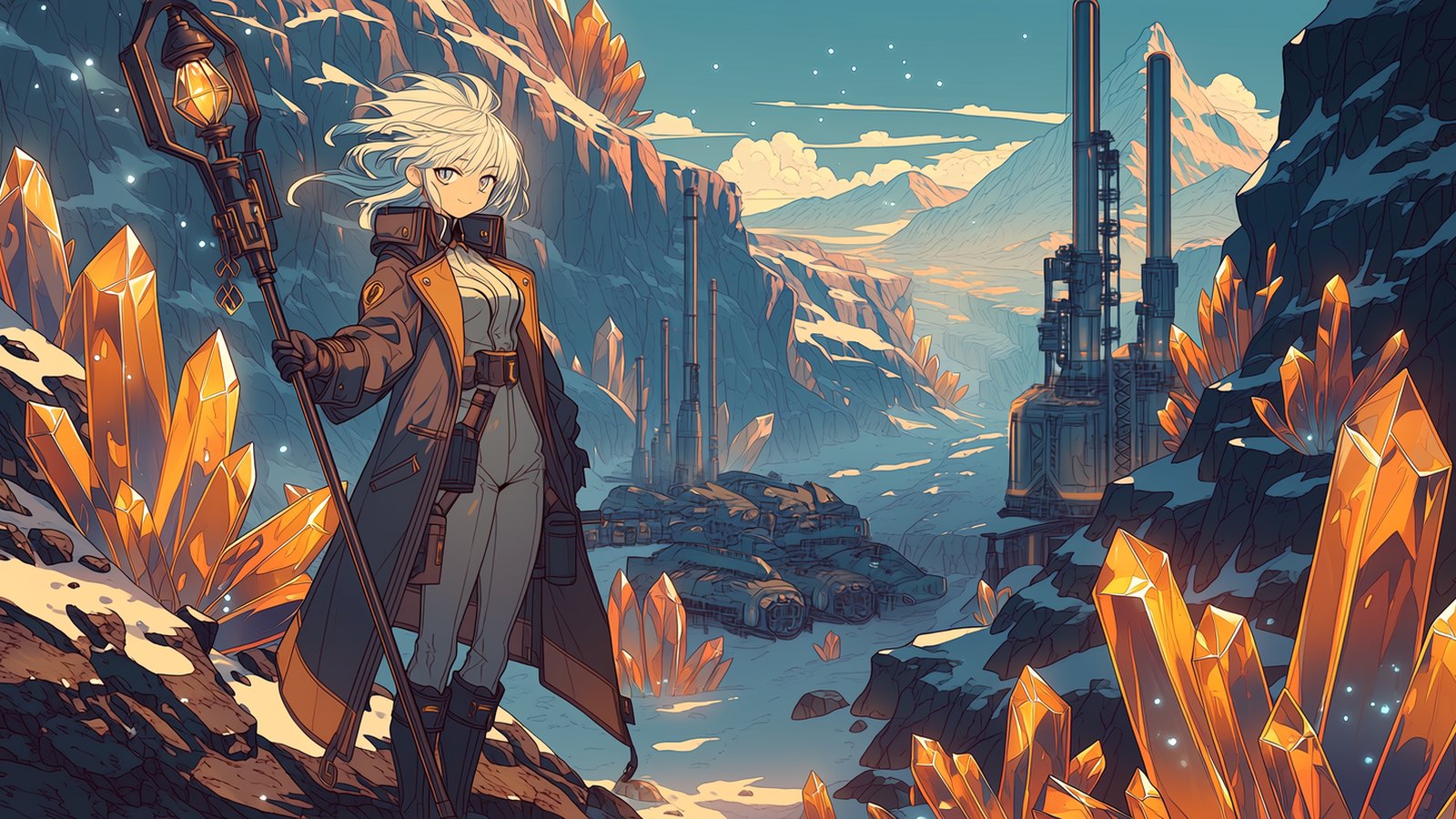
The Steam page is open, and you still cannot download the game. Arknights: Endfield’s page went live on August 13, 2026, and it reads “Coming soon” with no date attached. Everywhere else, the game arrived on January 22, 2026, all at once: PS5, PC through the publisher’s own launcher and the Epic Games Store, iOS, Android. Seven months later, the largest shop for PC games is the one gap in that list. The company has never explained the gap. The revenue breakdown does most of the explaining on its behalf. Everything below was checked as of August 23, 2026.
The money sits away from the phone
Gacha means mobile. That reflex has been reliable for a decade, and Endfield breaks it. TechNode reported on February 9, 2026 that the game took in 1.2 billion yuan, roughly 173 million dollars, across all platforms in its first two weeks. Mobile revenue over six months came to 126.7 million dollars. Half a year of phone spending falls short of two weeks of everything.
The split explains why. About 60 percent of Chinese revenue arrives from PC, and overseas, PC and PS5 together account for roughly 70 percent. Google Play lists more than five million downloads. Players gather on phones; the money is made on larger screens.
Read the missing Steam release against those numbers and it stops looking like an oversight. Selling through your own launcher costs nothing in platform fees, and the Epic Games Store takes a smaller cut than Valve does. Steam’s standard share is 30 percent of the sale. A publisher earning most of its revenue on PC has every reason to keep that 30 percent until last. What the August 13 page does carry is a wishlist campaign, and from August 26 to 30 the game occupies two adjacent booths in Hall 8.1 at Gamescom. Whether a Steam date arrives there has not been announced.
Four operators, and a belt line to lay
The publisher calls this a 3D real-time strategy RPG. In the hand it plays like an action game. You field four operators, run the terrain yourself, and swap between them to chain skills; the official copy describes combat as moving them freely and chaining their skills to shatter enemy defenses. Nothing is placed on a lane and watched, which is the whole distance between this and the original Arknights.
The other half of the game is a factory. The system is called the AIC Factory: you site extractors, connect them with belts, supply power, and refine what comes out. Steam’s own description offers the choice of following existing production layouts or designing your own automated lines. A pared-down Factorio bolted onto a character RPG is not a bad first approximation.
The patch notes are the proof that this layer is not decorative. The July 16 version, Homecoming, added nine gas-related production plans covering extraction and purification and raised regional development caps. The next version, previewed on August 22, spends much of its quality-of-life list on placement: a mode that keeps placing facilities without leaving construction, and a box-select readout that shows how many facilities a blueprint can still hold. Developers patch where players spend their hours.
One thing is absent. There is no co-op. The only play-mode category on the Steam page is single-player, and no button invites a friend in.
What came across from the tower defense game
The original Arknights reached the global App Store in January 2020 as a tower defense game, built around placing operators in corridors to hold back waves, and it is still running. What survived into Endfield is the studio, Hypergryph, the vocabulary of Originium and Operators, and a world where industry and disaster are the same story. What did not survive is the genre and the setting. Endfield takes place on a planet called Talos-II, and you wake as the Endministrator of Endfield Industries. Nothing here requires having played the first game.
One more thing changed: who sells it. Yostar handles the original’s global service, while Endfield is published by GRYPHLINE, which Hypergryph established for the purpose. The App Store seller of record is GRYPH FRONTIER PTE. LTD. A company that has taken distribution in-house is exactly the kind of company that leaves a 30 percent storefront for last.
Eighty pulls, one hundred twenty, and the weapon track
Headhunting is the paid channel. The paid currency is Oroberyl, and each banner also accepts its own permits.
The guarantees are spelled out in the official notice for the new banner type opening on September 24. A 5-star or better arrives within 10 pulls, a 6-star within 80, and the featured 6-star within 120. Every 240 pulls hand over a bonus token for the featured operator. The practical reading is that the ceiling on a featured character is 120 pulls, lower than systems where a lost coin flip sends you to a second pity.
Weapons run on their own track. Weapon banners, called Issues, give ten weapons per pull with at least one 5-star or better. Three consecutive Issues without a 6-star guarantee one on the fourth, and seven without the featured 6-star guarantee it on the eighth. Add the seasonal pass introduced in version 1.1 and the limited-time offer bundles that accompany each banner. Because operators and weapons are separate lines, fully outfitting one character means paying twice over.
Before any price talk, a caveat. The per-pull cost in Oroberyl and the full probability table are not in the announcements; the notices point players to the in-game Headhunting screen. The figure that can be checked from outside is the storefront band: Google Play lists in-app purchases from 0.99 to 69.99 dollars.
Sixty gigabytes before the first ten hours
Storage comes first. The Steam page lists a minimum of an Intel Core i5-9400F, 16GB of RAM, a GeForce GTX 1060 and 60GB of free space, with an i7-10700K and an RTX 2060 recommended. iOS 15 or later is required and the App Store download runs about 3.5GB. The phone build is far lighter, though the revenue split above is a reason to think twice about where to start. Four languages carry full voice work according to the Steam listing: English, Japanese, Simplified Chinese and Korean.
The first few hours are spent learning vocabulary. A single paragraph of official copy contains Talos-II, the Civilization Band, Originium and the AIC Factory, and the game uses those words in earnest. The way through is to stop rushing the story and push to the point where the factory opens, because that is where players sort themselves into the ones who stay for the combat and the ones who stay for the belts.
Hold off on paying until then. Bank Oroberyl, confirm that the factory layer suits you, and open the Headhunting screen afterward. Running out of content is not the risk here: since the January 22 launch, major updates landed on March 12, April 17, June 5 and July 16, a cadence of six or seven weeks.
Who should walk past this one
Phone-only players are the hardest case. Placing dozens of facilities and copying them by blueprint is not a small-screen activity, and both the revenue and the reputation of this game live on larger displays. Anyone bored by logistics puzzles gives up half the product; skip the factory and what remains is a competent action RPG and nothing more. Players looking for something to run with friends have no route in, since co-op does not exist, and collectors who keep their libraries on Steam have nowhere to register it yet.
The fit is equally clear. Anyone who has wanted an action RPG with a base worth building, anyone who would rather play a gacha on a PS5 or a PC like a console release, anyone who wants a single-player game with several hundred hours in it.
Starting now looks like this. Clear 60GB on PC or PS5, spend the first ten hours banking Oroberyl instead of spending it, and decide about money after reading the terms of the new banner type on September 24. On the Steam side, a wishlist entry is the only available action. When the Steam build ships, and whether an existing account carries over to it, is written down nowhere.
Screenshots
Images: official App Store assets