Nintendo's 40th anniversary headliner is 28 years old: Ocarina of Time returns November 5, Switch 2 only
Series producer Eiji Aonuma showed the first gameplay of the Ocarina of Time remake at the Legend of Zelda 40th Anniversary Direct on September 8 and dated it November 5. It is a Nintendo Switch 2 exclusive, $59.99 digital and $69.99 physical, rebuilt down to the texture of each material.
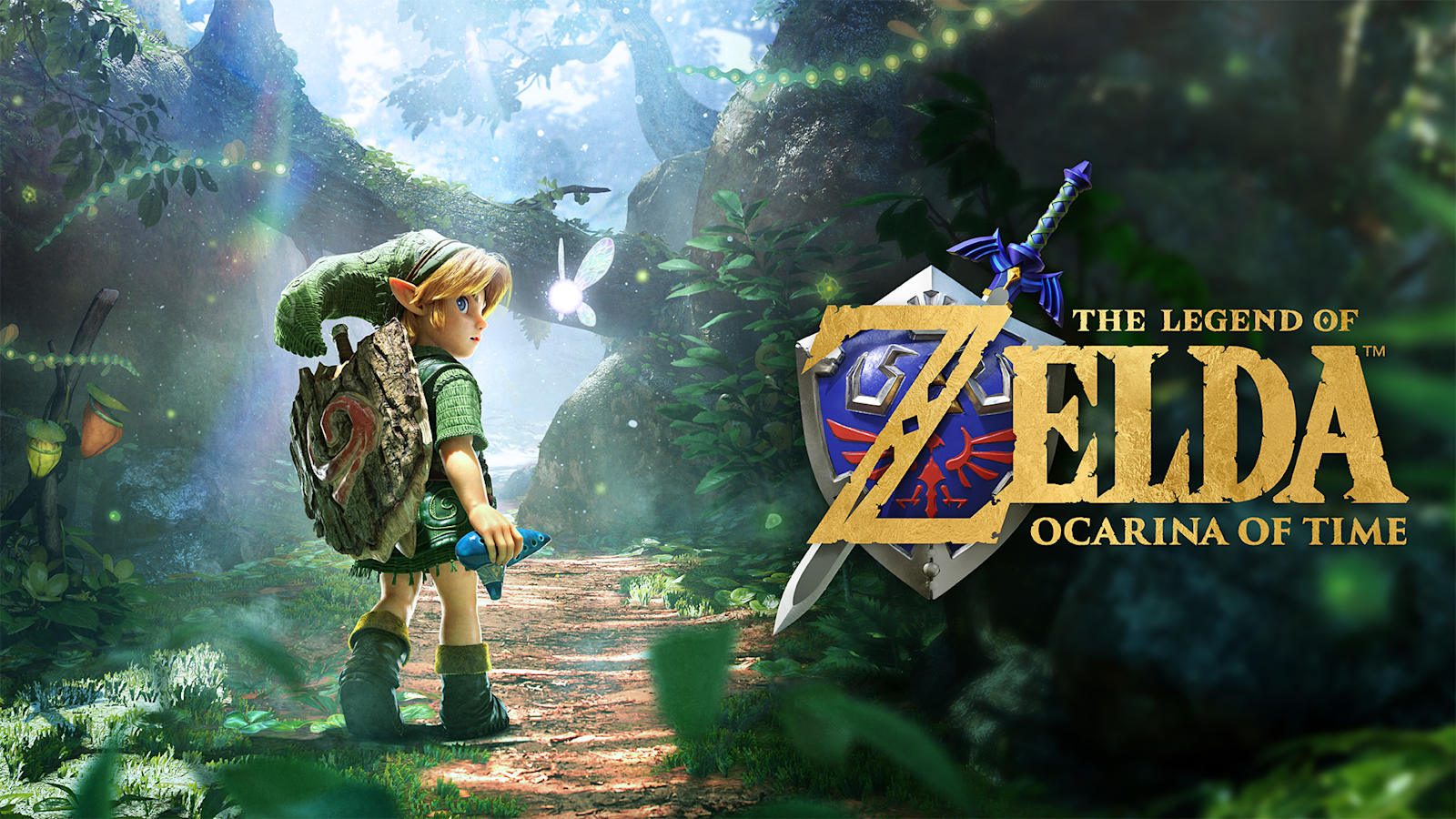
The first Legend of Zelda came out on February 21, 1986 for the Family Computer Disk System [5]. Forty years later, the game Nintendo put at the front of the celebration is not a new one. It is Ocarina of Time, which reached the Nintendo 64 on November 21, 1998 [5]. At the Legend of Zelda 40th Anniversary Direct on September 8, series producer Eiji Aonuma showed the remake running for the first time and gave it a date of November 5 [1]. Everything below reflects September 9, 2026.
Navi, two eras, and a Triforce somebody else wants
Ganondorf is scheming his way into the Sacred Realm to seize the Triforce and take over the world. Stopping him is the job of a young hero named Link, and the player goes into dungeons with a companion fairy called Navi, solves puzzles and collects powerful weapons. Restoring balance to Hyrule means travelling across two different eras. That paragraph on Nintendo’s US store page is the whole plot summary the publisher offers [2].
It is a solo game. The store page lists one player on a single system, with TV, tabletop and handheld modes all supported, and an estimated download of 27 GB [2]. Ratings split by region: Everyone 10+ with Animated Blood and Fantasy Violence in the US, CERO B for ages 12 and up in Japan, PEGI 12 in Europe [2][3][4].
The shape of the game has to be read from the same paragraph. Dungeons, puzzles, powerful weapons, two eras [2]. That is a different rhythm from the recent entries, where the map opens and you climb whatever you like, and it reads as the kind of adventure that always has a next objective. Which is presumably why this version adds a screen that shows you what that objective is [1].
Rebuilt down to the texture of each material
The notice Nintendo published after the Direct sorts the changes into four groups [1]. The first is performance and presentation. Visuals were completely overhauled down to the textures of each material, actions respond faster, loading is shorter, the frame rate holds steadier, sound effects were refreshed and the music is symphonic orchestral.
The second is control. Jumping and running freely arrive as newly added button commands, and camera control moves onto the Right Stick. The third is Hyrule itself. Every character Link meets is fully voiced and has a great deal more to say, cutscenes were expanded, locations were fully remodelled so the camera can move around them, and the day and night cycle now keeps running no matter where you are, towns included.
The fourth is Threads of Time. At any point in the adventure you can look at how far the story has come and what the next objective is, and a large tapestry fills in as the journey continues [1].
Hum a tune and Link plays it
The ocarina is where this version does something the 1998 hardware could not. Hum one of the songs Link has learned within range of the Switch 2’s built-in microphone and he performs it in the game. It also answers to instruments, including the playable ocarina and the HORI electric ocarina both arriving later this year [1].
There is a phone-side layer as well. ZELDA NOTES, inside the Nintendo Switch App, currently supports the Nintendo Switch 2 Editions of Breath of the Wild and Tears of the Kingdom, and Ocarina of Time joins them [1]. It brings Today’s Record, a chronological log of the day’s accomplishments; Gossip Quest, which sends you to find an in-game location from a hint image; Play Ocarina, a virtual ocarina on the touchscreen whose scores can be shared by QR code; and a quiz with over 2,000 questions, once a day unless you spend rupees earned in the game for extra tries [1]. All of it needs a Nintendo Account, a persistent internet connection and a compatible smart device [2].
amiibo work two ways. Tapping any existing Legend of Zelda series figure hands you in-game extras, and tapping the Young Link and Young Zelda figures coming in 2027 unlocks masks that evoke a retro graphical style [2]. amiibo are sold separately.
$59.99, $69.99 and ¥7,980
The US store lists $59.99 for the download and $69.99 for the boxed copy [2]. Nintendo’s Japanese page lists ¥7,980 and ¥8,980, both tax included [3]. Pre-orders are open on both.
Buying physical has a clock on it. The first print run ships in packaging with textured foil cover art, and the notice says it is available while supplies last [1].
The purchase ends there. The US store page carries no in-game purchase listing, and the only place a Nintendo Switch Online membership is required is Save Data Cloud backup [2]. What sits beside the game price is the hardware price. On October 29, a week before the game, Nintendo releases the Nintendo Switch 2 – The Legend of Zelda – 40th Anniversary Edition system along with anniversary Pro Controllers, with and without a display stand, and a carrying case with screen protector, all in a Triforce design. The Pro Controller with the display stand is sold only at Nintendo NEW YORK, Nintendo SAN FRANCISCO and the Nintendo Store [1].
Three kinds of buyer are standing at the pre-order screen
If you finished the Nintendo 64 version, $59.99 is not buying you the story. It is buying the change list, and three items carry most of its weight: voices on every character, a re-recorded symphonic score, and a camera on the Right Stick [1]. Decide whether those three are worth it and the transaction is over either way.
If Breath of the Wild was your first Zelda, go in knowing the rhythm is different. What the store copy describes is dungeons, puzzles and two eras, and the new progress screen exists because there is a next objective to check [1][2]. Expecting to wander a large map at will is the one place this could disappoint.
If there is no Switch 2 in the house, the console price comes before the game price, and the anniversary system on October 29 is not bundled with the game, so it takes two purchases to be playing on November 5 [1]. Sixteen languages are supported, Korean, Japanese, Simplified Chinese and Traditional Chinese among them, though the page does not separate subtitles from voice acting [2].
Nintendo has fixed three dates around this game. The console lands October 29, the game lands November 5, and the amiibo that unlock the masks land sometime in 2027. Anyone opening this story for the first time only needs the second one.
Sources
[1] Nintendo. The Legend of Zelda 40th Anniversary celebration revealed in new Nintendo Direct presentation. Nintendo news, September 8, 2026.
[2] Nintendo. The Legend of Zelda: Ocarina of Time, US store page. Retrieved September 9, 2026.
[3] Nintendo. ゼルダの伝説 時のオカリナ, Japanese official page. Retrieved September 9, 2026.
[4] Nintendo. The Legend of Zelda: Ocarina of Time, Nintendo UK page. Retrieved September 9, 2026.
[5] Nintendo. The Legend of Zelda series HISTORY. Zelda Portal, retrieved September 9, 2026.
Screenshots
Images: official Nintendo assets