One week before the Switch 2 edition, four things Elden Ring charges you for
Elden Ring reaches Nintendo Switch 2 on August 28. What you pay for across the base game, the expansion, Nightreign and the new pack, what the first ten hours feel like, and which version to buy on which machine.
Before you pick
- Bottom line
- For someone who treats failure as information, this is the open world of the decade; for someone who wants to follow a marker, it is a ten-hour wall.
- Know before you start
- The game explains almost nothing, so the first ten hours are a real barrier
- How it plays
- Single-player
- Online co-op
- Versus
- Story-driven
- Save anytime
- Compare with
- LighterThe Witcher 3: Wild HuntStory-driven
- With friendsBorderlands 4Online co-op
On August 28, 2026, Elden Ring arrives on Nintendo Switch 2. A game that launched on PC, PlayStation and Xbox on February 25, 2022 reaches a handheld four and a half years later, after one delay that was blamed on performance. This piece is for two kinds of readers: the person wondering whether to wait for that version, and the person with another machine who could start tonight. Everything below is as of August 22, 2026.
What Changes on August 28
The Switch 2 release is called Elden Ring Tarnished Edition. One purchase holds the base game, the Shadow of the Erdtree expansion from June 21, 2024, two new starting classes (the Heavy Knight and the Idus Knight), four new armor sets, and three skins that change the look of Torrent, the spectral horse. Nintendo's announcement lists it at $79.99, and the Japanese price is 9,020 yen.
It was supposed to ship in 2025. On October 23, 2025 the official Elden Ring account on X said the team needed additional time for game performance adjustments and moved it to 2026; the date itself was only fixed on June 4, 2026. Because the stated reason was performance, how smoothly it runs in handheld mode is a question nobody outside FromSoftware can answer until retail copies are measured. The physical version also deserves a second look: it is a game-key card. The cartridge carries a download license, not the game, so the first launch needs storage space and an internet connection.
Owners of other machines get something the same day. The two classes, four armor sets and three Torrent skins are sold separately as the Tarnished Pack, due August 28 on PS4, PS5, Xbox One, Xbox Series X|S and PC. Bandai Namco Europe lists it at 4.99 euros; the Japanese price is 550 yen. A US dollar figure had not been published when this was written.
A Land Without Markers
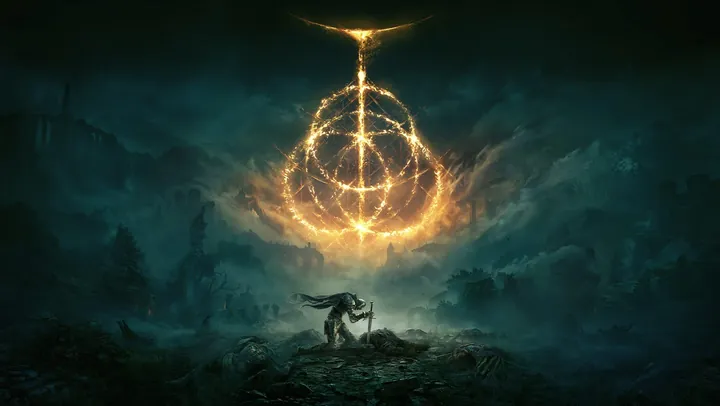
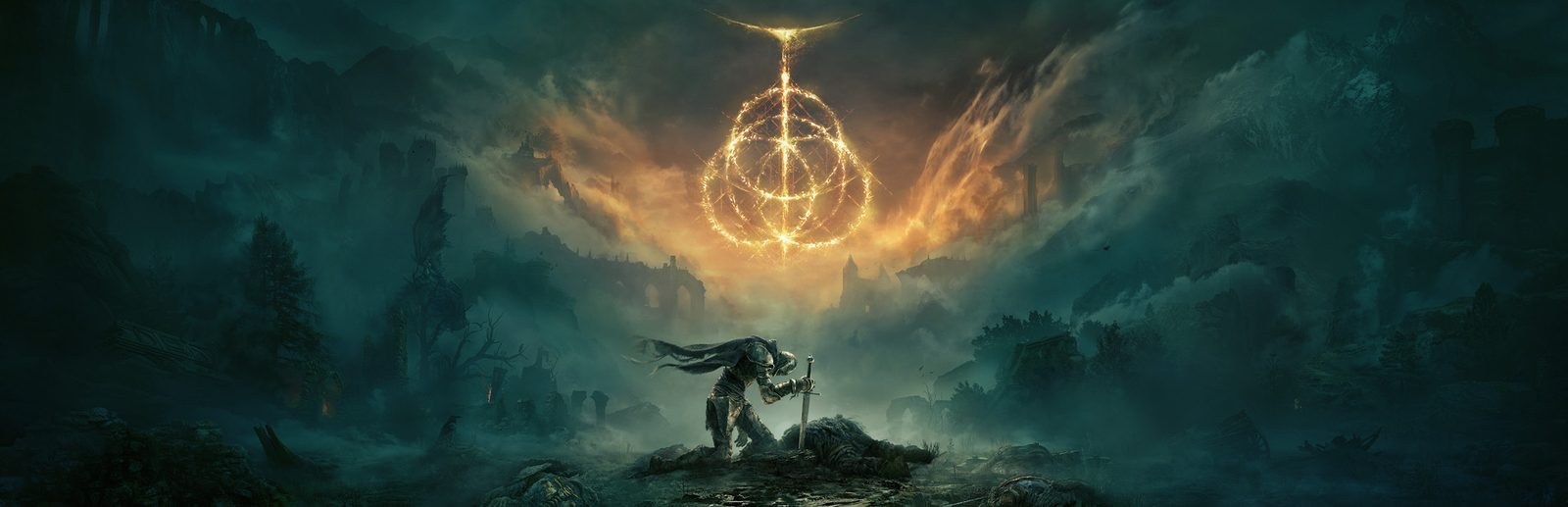
Elden Ring is an open-world action RPG from FromSoftware. You play a Tarnished, an exile who lost the grace of the land and has been called back to gather the shards of the shattered Elden Ring. The world was built by director Hidetaka Miyazaki together with George R. R. Martin, the novelist behind A Song of Ice and Fire. And yet the game tells you almost none of that directly. The story lives in item descriptions and half-sentences from characters who wander off.
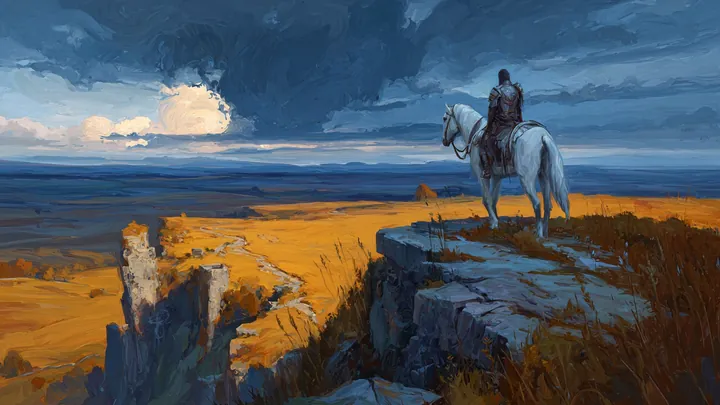
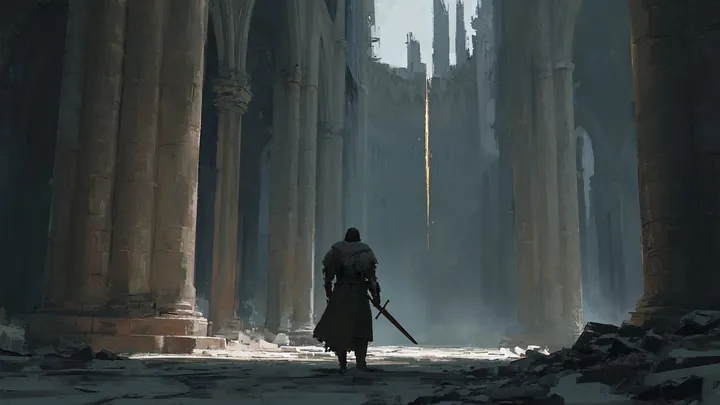
The biggest difference from other open worlds is the absence of quest markers. A character speaks to you once, then moves somewhere else without saying where. The map starts blank, and each region only draws itself after you physically pick up a map fragment from a stone marker in the field. In exchange, every castle, tower and cave mouth you can see is a place you can actually enter. Wanting to reach that fortress on the horizon becomes the direction of play.
The numbers explain why it is being discussed again. According to a Kadokawa Group press release dated July 24, 2025, the base game had shipped more than 30 million units and Shadow of the Erdtree had passed 10 million. The expansion sold 5 million copies in its first three days. FromSoftware's earlier games were cult favorites; this is the one that carried their design into mainstream sales figures.
Four Things You Can Pay For
There are exactly four. Steam prices, US store.
The base game is $59.99. Shadow of the Erdtree is $39.99, requires the base game, and on top of that requires you to defeat two specific bosses in the main game before its region opens, so it can sit unused for dozens of hours after purchase. Base plus expansion on PC comes to $99.98. The Switch 2 edition at $79.99 bundles both plus the new pack, which makes it the simpler choice for someone who only owns a Switch 2.
Third is Elden Ring Nightreign, a separate $39.99 game that does not need the base game. Fourth is the Tarnished Pack above. That is the complete list. There is no gacha, no season pass, no microtransaction that sells experience points. The only recurring cost to factor in is that online co-op on consoles needs the platform's own online subscription.
The First Ten Hours Are for Dying
You are dropped into a wide meadow with no briefing. A knight in golden armor on horseback patrols the entrance to the first region, and nearly every new player dies to him a few times. He is not placed there to be beaten; he is placed there to be walked around. The first lesson the game teaches is that strong things can be avoided.
The loop works like this. Enemies drop runes, which are both experience and currency. At checkpoints called Sites of Grace you spend runes to level up. When you die, your runes stay where you fell, and you get one attempt to walk back and recover them. Die again on the way and they are gone for good. Carrying 50,000 runes you have not spent is the most stressful state the game offers, and it is the engine behind everything.
Two things you obtain within the first ten hours change the difficulty more than any slider would. One is Torrent, the spectral horse, which lets you cross fields quickly and double jump. The other is Spirit Ashes, summonable ghost companions that split a boss's attention. If playing alone feels too heavy, you can call other players in to fight alongside you, with the caveat that while you are in co-op, other players can invade your world. When the first major gate boss stops you, leveling up in another region first is a legitimate answer. There is no fixed order.
Nightreign Is a Different Game With the Same Name
Elden Ring Nightreign, released May 30, 2025, borrows the world for a three-player co-op game. A team of three lands on an island called Limveld, survives three in-game days inside a shrinking safe zone while gathering gear, and fights a Nightlord on the third night. A run takes around forty minutes. You pick one of eight fixed characters rather than building your own, so the base game's freeform character growth is absent; in return, dozens of hours of progression are compressed into a single session.
It sold too: the same Kadokawa release puts it at 5 million units shipped by July 24, 2025. The timeline since then, briefly: weekly rotating Everdark Sovereigns, stronger versions of the bosses, began in June 2025; a harder Deep of Night mode arrived in September; and on December 4, 2025 the paid DLC The Forsaken Hollows ($15.00) added two characters, two bosses and one new map event. In 2026 there has been patch 1.03.2 on January 15 and hotfix 1.03.5 on March 31, and as of August 22 no further content has been announced.
If you are not sure solo Elden Ring is for you, this can come first. Just know that matchmaking is the default, and a team of three that cannot coordinate loses the whole run.
Who Stays and Who Leaves
The people who stay are easy to describe. Those who want to visit the unmarked spot on the map just because it is there. Those who treat ten deaths to a boss as pattern study rather than punishment. Those who enjoy assembling a story from fragments. Once it catches you, a hundred hours pass quickly.
The people who leave are just as clear. If you want the screen to tell you what to do next, or you play in thirty-minute pieces, the first ten hours will feel like a wall. For that second group, forty-minute runs of Nightreign are a better fit than the main game.
By machine, the next step looks like this. With a PC or PS5, buy the base game alone, play twenty hours, and pick up the expansion only after you have cleared the gate bosses that unlock it. With only a Switch 2, the safer move is to wait for the first week of measurements after August 28. A version that was held back ten months for performance tuning has not yet been tested in handheld mode by anyone outside the studio.
Screenshots
Images: official Steam assets