A cyberpunk pawnshop where any customer could be Security sold 350,000 copies in a day
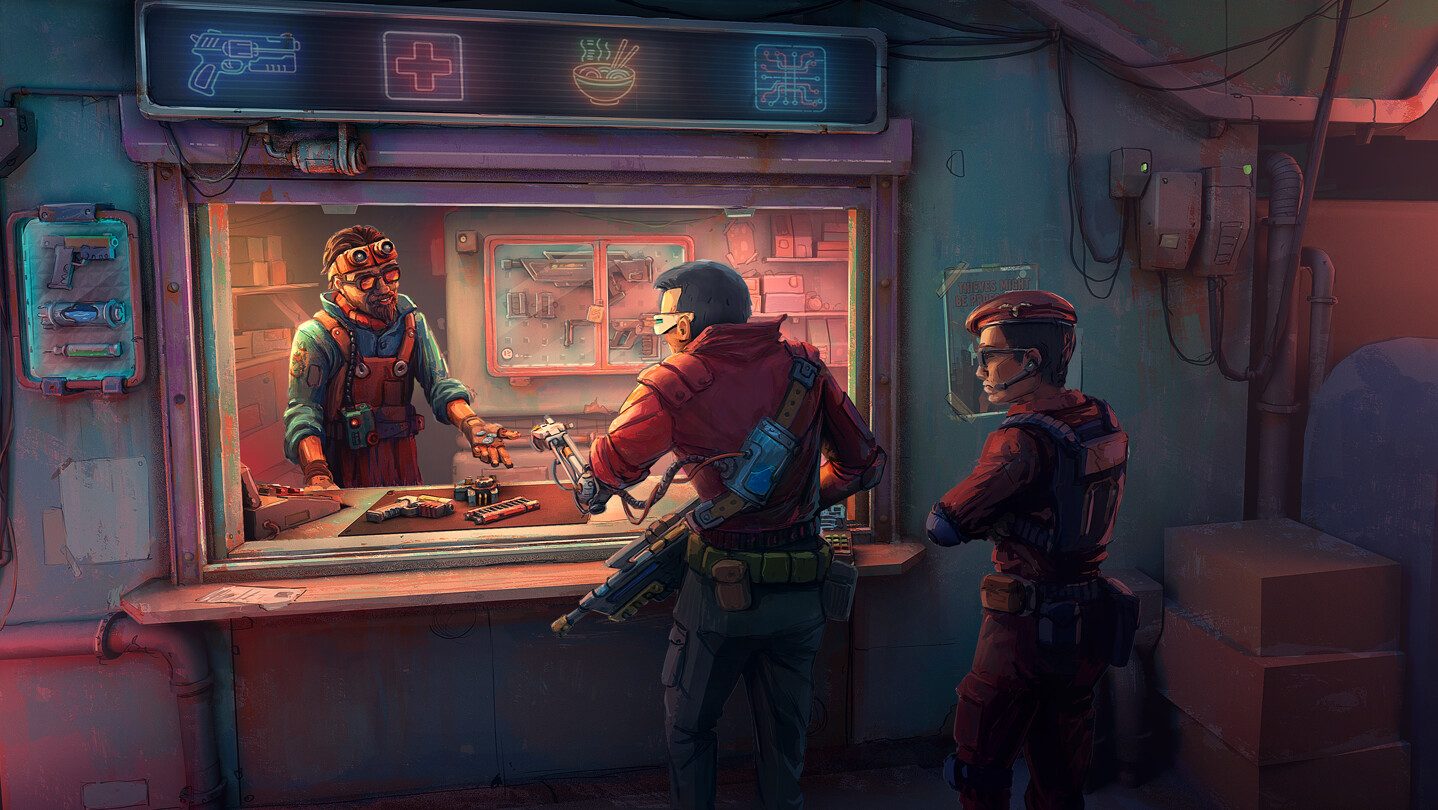
Probably Stolen puts you behind the counter of a pawnshop on a space station, deciding what to buy, report or ignore while the rent climbs. It sold more than 350,000 copies in its first 24 hours and peaked at 186,095 players on Steam on November 8. $17.99, Windows only.
Before you pick
- Bottom line
- If haggling, inspecting and deciding who to trust sounds like a good evening, Probably Stolen is one of the strongest launches of the month; if you need Korean text, there is none for now.
- Know before you start
- Windows only, and no Korean or Traditional Chinese text
- How it plays
- Single-player
- One run at a time
- Compare with
- LighterSlay the Spire 2One run at a time
- With friendsPEAKOnline co-op
Related video
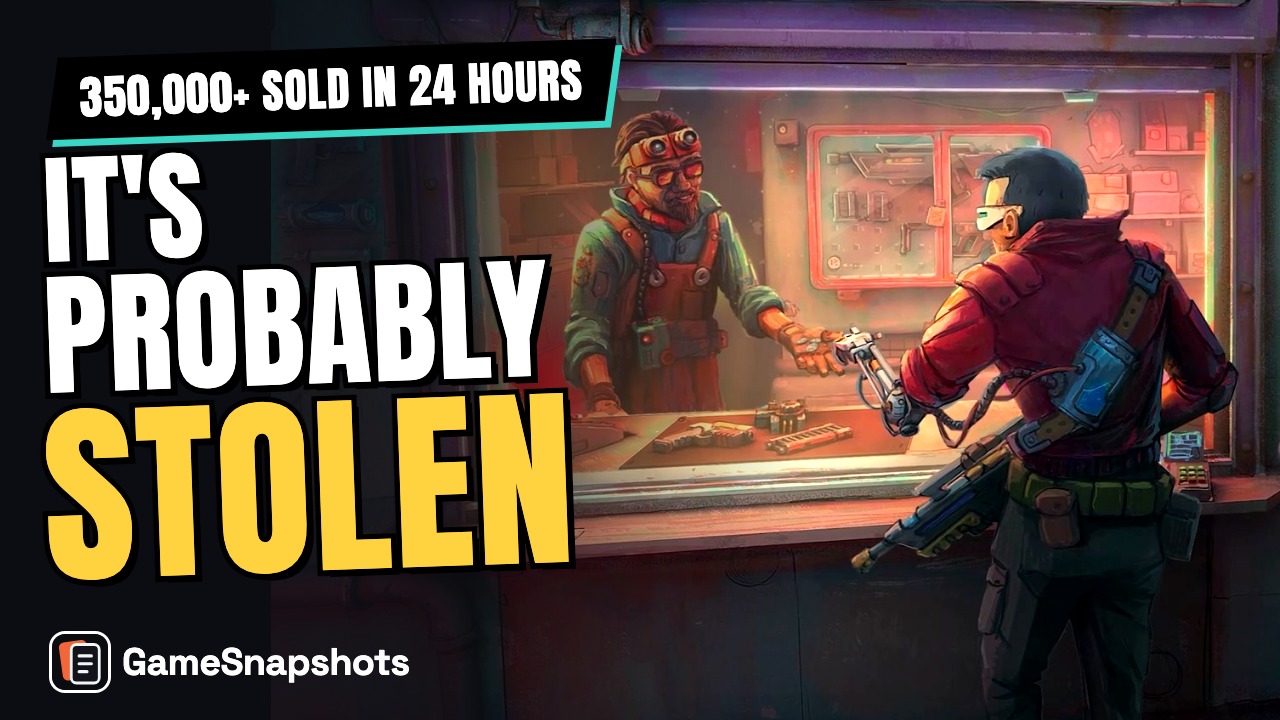
Two hundred thousand copies sold in the first few hours, then more than 350,000 in the first 24[4][5]. Probably Stolen, a pixel-art shop simulator published by tinyBuild, came out on Steam on October 28, 2026, and by November 8 Steam's own chart recorded a daily peak of 186,095 players at once[9]. At 19:43 Korean time on November 9 it still had 113,475 people online[10]. This review follows the store page and the team's announcements to see what kind of shop people are lining up to run.
Rent is the real boss
You are a former scavenger who got a storefront on a towering space station thanks to a generous loan and questionable timing[1]. The station is split by wealth and corruption, the rent keeps rising, and most of your best margins live in legal gray zones[1]. The goal is plain: earn enough to buy the shop from the landlord before the rent buries you. Reach it and the game hands you the full record of your run, including your most profitable sale, the days you survived and your total worth[3].
That frame gives every day a number to hit. Confiscated stock or one bad deal can leave you short on the next payment, so the question at the counter is never just whether an item is worth the price but whether you can afford to be wrong about it[1].
Nine ways to make money, nine ways to get burned
Version 1.0 ships with nine starting scenarios: Apprentice, Water Merchant, Fence, Gunsmith, Chemist, Hydroponic Farmer, Aquafarmer, Rat Wrangler and Rock Bottom, which starts you with nothing[3]. The team's pre-launch notes describe each one by its risk. Gunsmiths get high margins and security inspections, water merchants test, purify and relabel at their own liability, and the Rat Wrangler's description simply asks whether you can grow a healthy rat[2].
The store page puts the same idea more bluntly: weapons bring inspections, chemicals bring addiction, water brings liability and contraband brings raids[1]. Picking a scenario is less about a theme for the shop than about which kind of trouble you are willing to sell. Four difficulty options run from beginner friendly to very hard, and the team suggests pairing the hardest with Rock Bottom for anyone who wants the full squeeze[3].
Anyone at the counter could be wearing a wire
The other half of the game is people. A customer could be Security fishing for evidence, a revolutionary looking for leverage or a fallen elite testing how useful you are[1]. You approve a sale, refuse it, report it or look away, and someone is always taking notes. Reputation buys access and protection but also paints a target on your back[1].
The checks are concrete. Cigarette packs need visual inspection before resale, water has to be tested and filtered, weapons need permits and modifications, and rare items need appraisal so you do not overpay[1]. You can also cut quality, relabel fakes as genuine or fence stolen goods, as long as you think Security will not reach you, and you can hide contraband before an inspection or try a bribe[1][2]. Then there are Augs, augmented customers the team tells you to watch for when one walks in[2].
The store page flags the game as playable with a mouse only and without timed input[1], so the pressure comes from decisions rather than reflexes.
What the launch week says
The numbers come mostly from the team itself, and they climb quickly. A few hours after launch it posted 200,000 copies sold and a peak of more than 86,000 concurrent players reached within 90 minutes[4]. A day later it reported more than 350,000 copies, more than 320,000 unique players and a peak above 112,000[5]. On October 30 it announced half a million units and a 96% positive rating from nearly 3,000 Steam reviews[6], and on November 6 it marked one million "shopkeepers", the word its earlier posts used for copies sold[7]. Steam's most played chart, which is independent of the team, puts the November 8 peak at 186,095[9].
The demand did not come from nowhere. The team says more than 100,000 people tried a playtest that opened in August, and the game reached 500,000 wishlists the day before release[2].
What $17.99 buys, and what is missing
The price is $17.99 on the US store and KRW 17,910 in Korea, with a Supporter Edition that adds the official soundtrack[1][3]. Version 1.0 includes completed storylines for several characters, vending machines that keep selling overnight after you close, 21 achievements, Steam Workshop support and a modding API[3]. The roadmap the team published on November 6 covers updates in January and April, says November is reserved for fixes and quality-of-life work, and promises that every update on it will be free[7]. Earlier the team listed Junker, Organ Trader and Street Food Vendor scenarios and expeditions among the things it plans to add[3].
The gaps matter depending on where you play. Text is available in English, German, French, Spanish, Polish, Russian, Japanese and Simplified Chinese, with no Korean or Traditional Chinese[1]. A November 8 hotfix restored the previous Chinese translations of names, items, dialogue and interface text, and the same notice announced a modding security update to be merged on December 10, telling modders to update before then[8]. It runs on 64-bit Windows 10 with 8 GB of memory and 1 GB of storage[1]. Steam's content notice lists drug abuse, alcohol abuse and crimes such as racketeering, bribery and trading illegal items[1].
Two hours at the counter decides it
Based on official sources, the rating is 4.0. A shop where every sale is a small trial, nine scenarios that change the risks, mod support at launch and a team that says it patches every day based on player reports are the strengths[3][6]. Windows only, no Korean text and a subject built around crime and drugs are the deductions.
Steam refunds games played for under two hours within 14 days of purchase. That window is the cheapest way to test the one thing this game depends on, whether sizing up the person across the counter is fun for you. If the moment you decide whether to report a sale feels like the best part of the evening, keep it.
Sources
[1] Valve. Probably Stolen - Cyberpunk Shopkeeper Sim on Steam. Release date, price, languages, categories, system requirements and content notice, accessed November 9, 2026.
[2] Probably Stolen team. 500,000 Wishlists!. Steam announcement, October 27, 2026.
[3] Probably Stolen team. Probably Stolen is OUT NOW!. Steam announcement, October 28, 2026.
[4] Probably Stolen team. 200,000 Shopkeepers trading on Lower Levels!. Steam announcement, October 28, 2026.
[5] Probably Stolen team. 350,000 Shopkeepers in 24 hours! THANK YOU. Steam announcement, October 29, 2026.
[6] Probably Stolen team. 500,000 Shopkeepers have settled on the Lower Levels!. Steam announcement, October 30, 2026.
[7] Probably Stolen team. Roadmap and 1 Million Shopkeepers Celebration!. Steam announcement, November 6, 2026.
[8] Probably Stolen team. Cumulative Update 1.0.0.12 and 100-Rev13 Hotfix. Steam announcements, November 6 and November 8, 2026.
[9] Valve. Steam Web API GetMostPlayedGames. Daily peak for November 8, 2026.
[10] Valve. Steam Web API GetNumberOfCurrentPlayers. Current players, checked November 9, 2026 at 19:43 KST.
Screenshots
Images: official Steam assets